|
 Re: COYOTE CARNAGE – SOUTH TEXAS BRUSH COUNTRY
[Re: TEJAS]
#8449767
08/06/25 01:47 PM
08/06/25 01:47 PM
|
Joined: Feb 2018
Hi-Line Montana
Wild_Idaho

trapper
|
trapper
Joined: Feb 2018
Hi-Line Montana
|
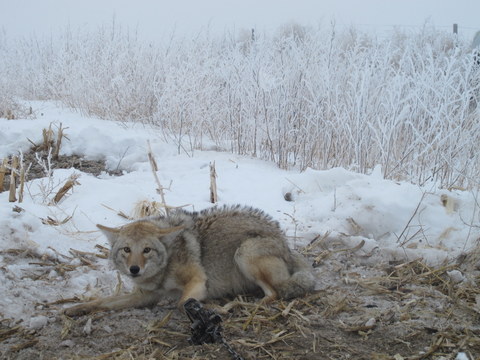
Here is a question for the T-Man Coyote Crew.
I’m sure we have all run into this scenario countless times.
With what set looks and situations do you notice the most back door or side approaches?
When this happens what is your solution to the problem?
Relatively inexperienced here, only 7 years trapping but I have noticed multiple times a coyote will backdoor a set I made with backing. I chalk it up to I left too much scent where I wanted them to approach so they worked where my scent wasn't? Enough interest for them to not be deterred by my scent but they were cautious enough not to work it from the front side. Sometimes I will make a set from the backdoor, hoping they will work from where I want them to.
Matthew 5:3-12
|
|
|
Re: COYOTE CARNAGE – SOUTH TEXAS BRUSH COUNTRY
[Re: TEJAS]
#8449809
08/06/25 03:05 PM
08/06/25 03:05 PM
|
Joined: Apr 2012
Nebraska
silkyplainscoyot
trapper
|
trapper
Joined: Apr 2012
Nebraska
|
Dirt hole sets will give you the most back door and side approaches from what I have seen.
I'm a little different Tejas. I would have used that tuft of grass and still feel confident in catching most coyotes. Years ago, I read a study that said 9 out of 10 coyotes would approach from the downwind side of the set and approach at a 45-degree angle to the attractant. So, I would offset my trap a little off center for the correct approach. I was having success but noticed a lot of coyotes would almost come in at a 90-degree angle or as you put it, "side approaches." I was missing those coyotes approaching from the side, so I just started blocking in the sides with subtle, natural material from around the set. That corrected the problem, and I still take that approach to this day with very few misses.
I don't have very many back door approaches either. Maybe 3-5 a year. I feel that's when the wind changes and blows the opposite direction, so it gets worked on the back side. Sometimes, I have seen when a pair of coyotes come in and one is caught the other set 10 - 15 yards away will be approached with caution. Scratching at the trap bed, exposing trap, and then work from the back side if it really wants what is in the hole. To remedy that I just cover trap and add a little different smell to one or both sides of the dirt hole. Sometimes that's enough to throw them off and catch it on the next go around. If it returns and works the backside again, I then just add a trap to the backside.
Last edited by silkyplainscoyot; 08/06/25 03:06 PM.
|
|
|
Re: COYOTE CARNAGE – SOUTH TEXAS BRUSH COUNTRY
[Re: silkyplainscoyot]
#8450296
08/07/25 10:17 AM
08/07/25 10:17 AM
|
Joined: Jul 2017
South Texas Brush Country
TEJAS
OP
trapper
|
OP
trapper
Joined: Jul 2017
South Texas Brush Country
|
Dirt hole sets will give you the most back door and side approaches from what I have seen.
I'm a little different Tejas. I would have used that tuft of grass and still feel confident in catching most coyotes. Years ago, I read a study that said 9 out of 10 coyotes would approach from the downwind side of the set and approach at a 45-degree angle to the attractant. So, I would offset my trap a little off center for the correct approach. I was having success but noticed a lot of coyotes would almost come in at a 90-degree angle or as you put it, "side approaches." I was missing those coyotes approaching from the side, so I just started blocking in the sides with subtle, natural material from around the set. That corrected the problem, and I still take that approach to this day with very few misses.
I don't have very many back door approaches either. Maybe 3-5 a year. I feel that's when the wind changes and blows the opposite direction, so it gets worked on the back side. Sometimes, I have seen when a pair of coyotes come in and one is caught the other set 10 - 15 yards away will be approached with caution. Scratching at the trap bed, exposing trap, and then work from the back side if it really wants what is in the hole. To remedy that I just cover trap and add a little different smell to one or both sides of the dirt hole. Sometimes that's enough to throw them off and catch it on the next go around. If it returns and works the backside again, I then just add a trap to the backside. Sounds like your countermoves work like a charm. Folks would do well to try your approach next time they run into this problem. Keeping them guessing always results in more catches. I noticed the same thing when it comes to dirt holes. Three & nine o’clock approaches to the hole were most common. I think I might get more digging here simply because of the loose sand. Pawing at the set was a common occurrence here at one time due primarily to set and attractant choice.
|
|
|
Re: COYOTE CARNAGE – SOUTH TEXAS BRUSH COUNTRY
[Re: bearcat2]
#8452026
08/10/25 11:55 AM
08/10/25 11:55 AM
|
Joined: Jul 2017
South Texas Brush Country
TEJAS
OP
trapper
|
OP
trapper
Joined: Jul 2017
South Texas Brush Country
|
I like walk throughs myself. Of course I'm usually in thicker terrain than you are. So I am often setting on the side of a road or trail (or right in it). In that scenario I pretty much know where he is coming from or going to. So setting on the edge of or in his travelway I don't have a lot of issue with backdoor approaches. Although it does happen. But usually my "backing" is more a "siding", he is coming down the trail and there is brush on the sides, I will pick something that sticks out to my eye, rock, tree, your clump of grass, whatever. Then I set my trap in front of it for a "walk-by" and put the attractant at it. All he has to do is walk on that side of the trail while he sniffs it as he walks by.
I find I have more back door approaches when I set in open areas like your picture. With or without backing. Doesn't mean I won't set there if that is where they are using, I just am aware that I may have more circling or approaching from the opposite direction that I desire.
I don't recall ever having a backdoor approach when I use a large tree (2+ foot diameter) as a pee post. Which is a little bit interesting because I have observed them circling such trees that are natural pee posts that I have never approached, I've seen snow completely padded down with tracks all the way around them, but I've never seen where they have came into the backside only of one I've set. BC2 you make a really good point on backing and how it pertains to road sets. I've seen a few instances where real savvy coyotes picked up on the repetitive pattern that most road sets have in common. In this instance the trap almost always guards the space between the road and the attractant. They figured that out came in through the back door on every set on the entire road. I showed them a 180° every third set and that ended their Reign of Mayhem.
|
|
|
Re: COYOTE CARNAGE – SOUTH TEXAS BRUSH COUNTRY
[Re: TEJAS]
#8458470
08/22/25 07:00 AM
08/22/25 07:00 AM
|
Joined: Jul 2017
South Texas Brush Country
TEJAS
OP
trapper
|
OP
trapper
Joined: Jul 2017
South Texas Brush Country
|
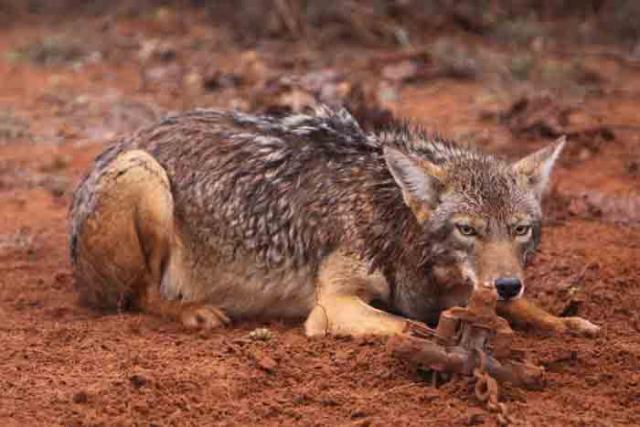
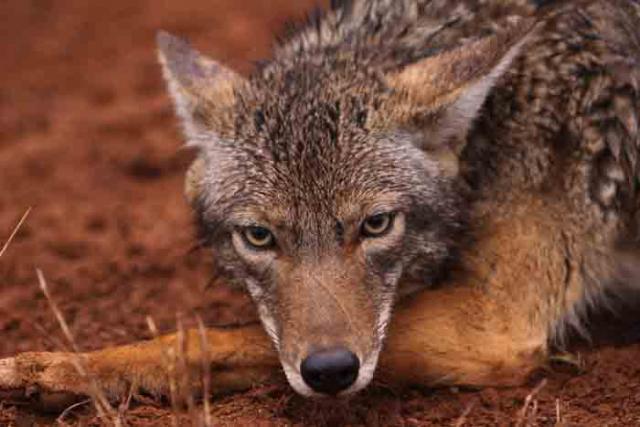
It is always good to take out an up-and-coming male. He is no longer a lean, mean, fawn killing machine. 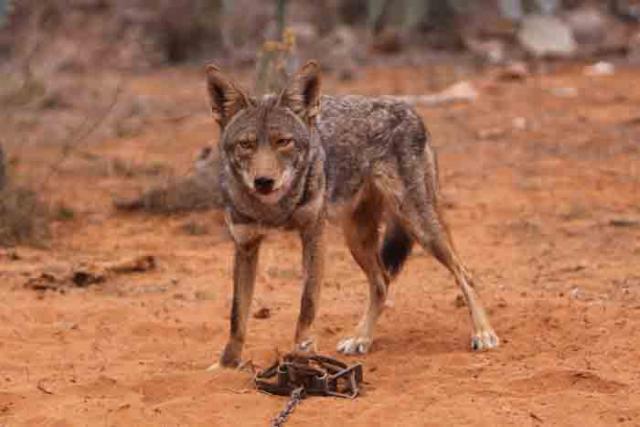 This was the third catch in six days for this set. Two females preceded this young fella. Flat Sets remain the house special in Cactus Country. 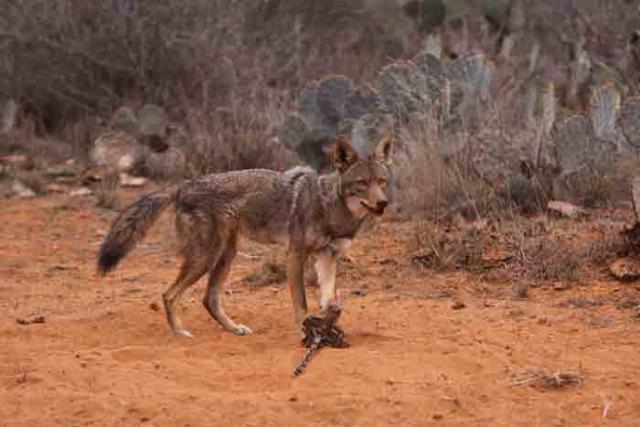 This coyote had a good look to him. He was pretty photogenic. 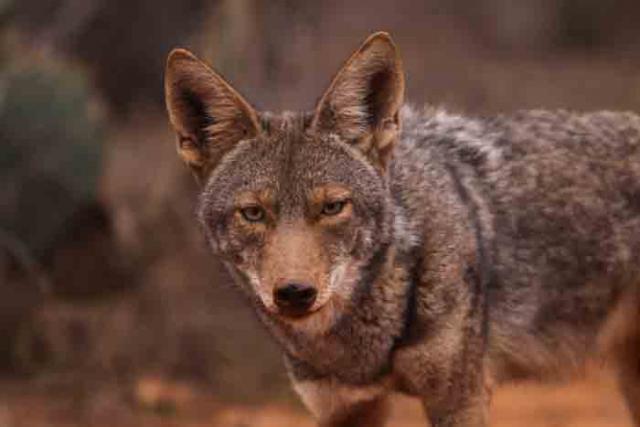
|
|
|
Re: COYOTE CARNAGE – SOUTH TEXAS BRUSH COUNTRY
[Re: TEJAS]
#8458940
08/23/25 07:18 AM
08/23/25 07:18 AM
|
Joined: Jul 2017
South Texas Brush Country
TEJAS
OP
trapper
|
OP
trapper
Joined: Jul 2017
South Texas Brush Country
|
Any debris left in a catch circle can be a real distraction for the coyote’s eye and nose. It can and will cause a lot of problems in many cases. Clean up the area. As skittish as a coyote is, it is easy to overload his senses. Minimal visual and olfactory cues at a set are often the answer. 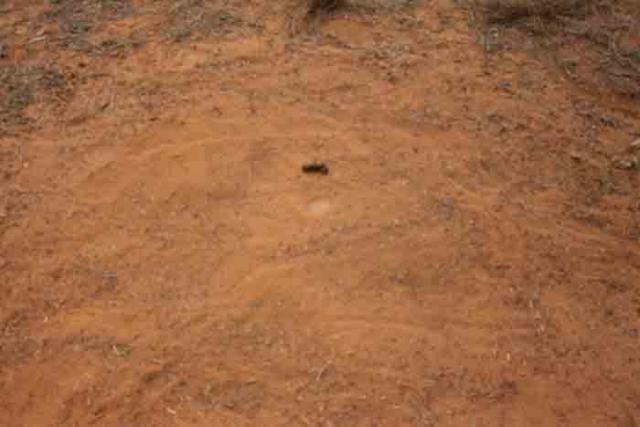 Smoothing out the set area and making it uniform and flat makes for a good presentation. Uneven ground with terrain change along with debris scattered about can cause a lot of headaches. 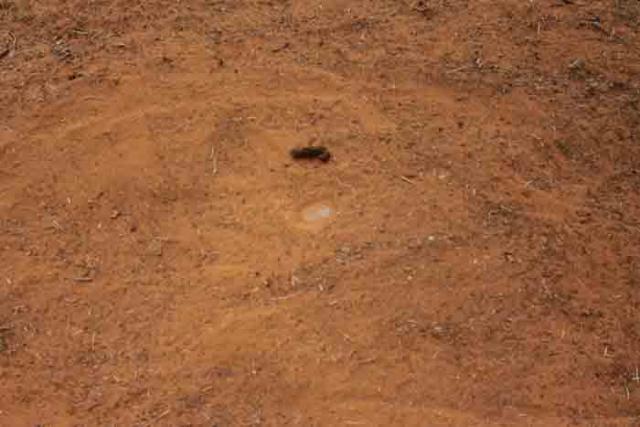 Give the coyote a single visual to focus on along with an open playing field. Combine this with proper pan placement in accordance with wind direction. That combination will reel in more coyotes than backing and blocking ever thought about 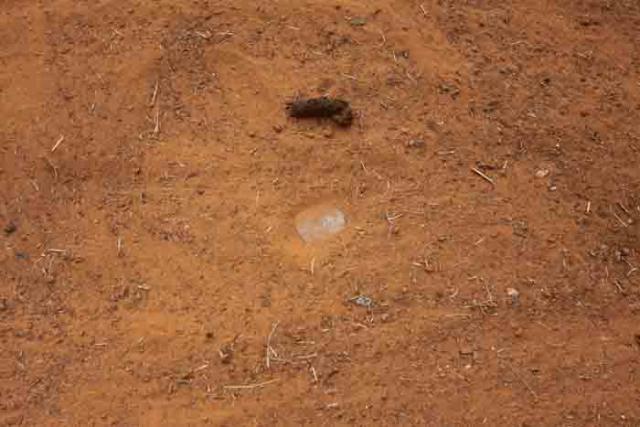
|
|
|
Re: COYOTE CARNAGE – SOUTH TEXAS BRUSH COUNTRY
[Re: TEJAS]
#8465263
09/07/25 03:06 PM
09/07/25 03:06 PM
|
Joined: Nov 2007
OBX N.C.
Leary Sink
trapper
|
trapper
Joined: Nov 2007
OBX N.C.
|
I think we have lost a perfectly good TEJAS!
We need to all check the grocery store and see if they put his picture on any milk cartons yet.
NC Trappers Association Life Member
Director District 1
|
|
|
Re: COYOTE CARNAGE – SOUTH TEXAS BRUSH COUNTRY
[Re: TEJAS]
#8465964
09/09/25 08:35 AM
09/09/25 08:35 AM
|
Joined: Jul 2017
South Texas Brush Country
TEJAS
OP
trapper
|
OP
trapper
Joined: Jul 2017
South Texas Brush Country
|
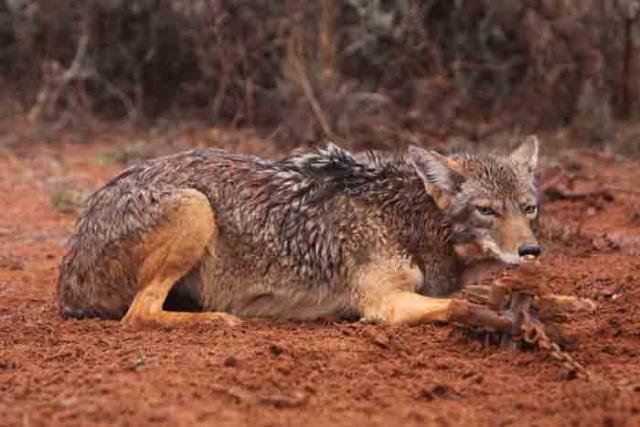
This male had some serious talent. Notice the worked set in the background. He made it by a total of four flat sets and was still mobile. Five was not his lucky number. 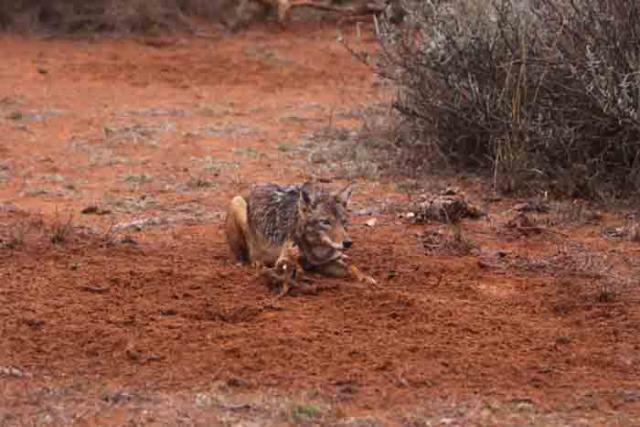
|
|
|
Re: COYOTE CARNAGE – SOUTH TEXAS BRUSH COUNTRY
[Re: TEJAS]
#8466150
09/09/25 05:54 PM
09/09/25 05:54 PM
|
Joined: Nov 2007
OBX N.C.
Leary Sink
trapper
|
trapper
Joined: Nov 2007
OBX N.C.
|
Glad to see more posts and some pretty work you are doing out there.
#5 looking at you like you owe him money.
NC Trappers Association Life Member
Director District 1
|
|
|
Re: COYOTE CARNAGE – SOUTH TEXAS BRUSH COUNTRY
[Re: TEJAS]
#8466201
09/09/25 07:11 PM
09/09/25 07:11 PM
|
Joined: Dec 2006
Maine
Mac
trapper
|
trapper
Joined: Dec 2006
Maine
|
Still getting it done my old friend TEJAS
Lots of great information this entire thread.
Mac
|
|
|
Re: COYOTE CARNAGE – SOUTH TEXAS BRUSH COUNTRY
[Re: TEJAS]
#8467171
09/11/25 08:34 AM
09/11/25 08:34 AM
|
Joined: Jul 2018
USA
TheCoyotero
trapper
|
trapper
Joined: Jul 2018
USA
|
Thanks MC !
MC, I always pondered this about drags.
Maybe you and some other folks can shed a little light on the subject.
I realize there are many good reasons for using drags.
One reason that I hear is to preserve a good set location.
We all know that an anchored catch tears up an otherwise good set location.
The general consensus is in some instances that is not a good thing.
In other cases the circle is a gold mine of great interest.
In either case a coyote is very interested in that circle of smell even if he wont step foot I it.
Now, when a coyote takes off on a drag to parts unknown he eventually gets hung up somewhere.
That entanglement site might be close or far away from the original spot.
In either case you now have a hot spot created that draws attention away from the original location where your sets are.
You know any coyote that gets a whiff of that circle is not going to pass it up.
In this case do you usually make a set wherever the coyote happens to get hung up to snag strays?
TEJAS, I wanted to revisit your question and provide some insight into some of my experiences with drags and those "hot spots" you mentioned. One of my trapping mentors, who was a career western gov't trapper, instructed me to always use a fresh trap in the original trap bed and then put in a set with the "used" trap at the hot spot, or where the coyote hung up. Using this knowledge has netted A LOT of repeat catches in both set locations. You are absolutely right in that you cannot ignore those hot spots. By the way, I have recently caught up on the entire thread and there are LOTS of great coyote information and insight contained in this thread. Well done, guys...
Sit with warriors. The conversation is different.
- F&AM -
|
|
|
|
|