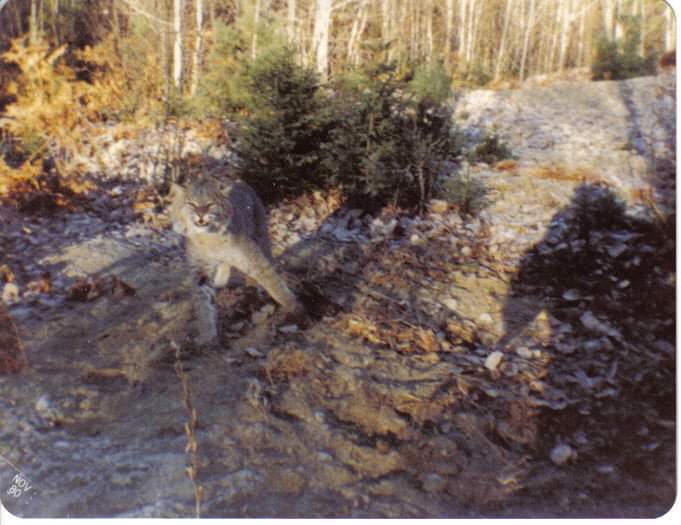
On March 7, 1996, Warner Glenn's hounds cornered what he thought was a mountain lion on a rocky bluff in the Peloncillo Mountains along the Arizona-New Mexico border. It was a jaguar. The fourth-generation Arizona cattleman and lifelong lion hunter reached for his camera instead of his rifle, took ten photographs that became the first images of a living wild jaguar ever captured in the United States, called off his dogs, and let the cat walk away. It did not run. It was not afraid of anything.
Glenn, his daughter Kelly, and a client from Minnesota named Al Kriedeman had been four days into a mountain lion hunt when one of Glenn's hounds picked up a fresh track and tore off with the pack behind it. Kelly radioed from the dogs' position. Glenn and Kriedeman rode toward the sound. The track, Glenn said later, looked different from any lion's we had ever seen. They pressed on, certain the dogs had found their lion.
The dogs had cornered their quarry on top of a rock bluff. Glenn climbed to where he could see what was above the circling hounds. He told the Britannica writer Gregory McNamee that he was completely shocked to see a very large, absolutely beautiful jaguar crouched on top, watching the circling hounds below.
What happened next tells you as much about the jaguar as it does about Glenn. One of the hounds, a dog named Rietta, moved too close. The jaguar grabbed him with one paw, then the other, and delivered two quick bites to the rump. Then it let go. Glenn said the jaguar could have easily killed the dogs. One bite to the head and they would have been gone. But he let them go on purpose. The cat had every reason to kill the dogs harassing it on a cliff face. It chose not to. Rietta and the other hounds needed a veterinary visit but none sustained broken bones or deep punctures.
Glenn had a full roll of film in his camera. He shot ten color photographs of the 175-pound male at close range while the jaguar crouched on the bluff looking at him with an expression that Glenn later described as neither fear nor aggression but something closer to appraisal. He yelled and stomped gravel to pull his hounds back. The rest of the hunting party arrived and helped gather the dogs. The jaguar looked back at them, struck a trot, and left. Glenn named him Border King.
Every other photograph of a wild jaguar in the United States before that moment showed a dead one. The last two reliably documented jaguars had both been shot: a large male killed near the Santa Cruz River by two teenage duck hunters in 1971, and another male cornered by hounds in the Dos Cabezas Mountains in 1986. The entire photographic record of wild American jaguars was a collection of carcasses and hides. Glenn's ten photographs from the Peloncillo bluff were the first to show one alive.
Six months later, fellow lion hunter Jack Childs and his party treed and photographed a different jaguar in the Baboquivari Mountains southwest of Tucson. Childs became a jaguar researcher afterward, traveling to Brazil's Pantanal to study the cats and placing remote cameras across southern Arizona that eventually documented Macho A and Macho B.
Glenn published a 28-page book of photographs titled Eyes of Fire: Encounter with a Borderlands Jaguar. He donated part of the proceeds to compensate ranchers for verified livestock losses to jaguars. He co-founded the Malpai Borderlands Group to advocate for ecologically sound range management across the borderland ranches. He received a federal recovery award for changing attitudes toward jaguars among the ranching communities that had spent a century shooting them.
In 2006, Glenn saw another jaguar in the Animas Mountains, 15 miles east of the Arizona border. Different animal. Different spot pattern. Beautiful condition. Seven people in his hunting party saw it. The cat walked away the same way Border King had walked away ten years earlier. Glenn reached for the camera again.
![[Linked Image]](https://trapperman.com/forum/attachments/usergals/2026/08/full-866-298742-672651743_122109742653271245_692309079578852641_n.jpg)
On the evening of November 19, 2011, a man named Donnie Fenn was hunting mountain lions with hounds in a dry canyon of the Whetstone Mountains in southeastern Arizona. His ten-year-old daughter Alyson was with him.
The dogs found something on a rocky outcrop ahead of them. Fenn caught up and stopped.
It was not a mountain lion.
It was a jaguar.
The cat was large, roughly two hundred pounds, heavily muscled, its coat covered in the rosettes of an animal that had not been part of the American landscape in living memory. It climbed a tree without hurry and looked down at Fenn, his daughter, and the dogs. Fenn held the dogs back and raised his camera.
The jaguar came down the trunk. The dogs pressed close. The cat swatted at them with one paw, leaving minor puncture wounds on a few of the hounds, then turned and climbed a second tree a short distance away. It settled on a branch twenty feet above the ground and watched.
Fenn called the dogs off.
The jaguar came down again. It looked at them for a moment, then walked into the scrub oak and disappeared. The entire encounter lasted minutes. It did not run. It left.
That night Fenn contacted the Arizona Game and Fish Department. The photographs showed a healthy adult male jaguar. Hair samples collected at the scene confirmed it. Researchers gave him a name. El Jefe. The Boss.
Over the following four years, remote cameras in the nearby Santa Rita Mountains photographed El Jefe more than a hundred times. He moved through the Sky Island ranges alone, hunting deer and javelina along corridors his species had used before ranchers and bounty hunters cleared them from the region in the early twentieth century. He crossed canyons. He left scat on ridgelines. He was, as far as anyone could determine, the only wild jaguar in the United States.
Then in September 2015, the cameras stopped capturing him. He was gone.
For seven years there was nothing. No photographs. No tracks. No scat. No confirmed sighting anywhere in the United States.
In August 2022, researchers working in central Sonora, Mexico, more than a hundred miles south of his last known Arizona location, identified him on a trail camera. He was older. He was moving more slowly. He was alive.
Jaguars once ranged as far north as the Grand Canyon. They lived in California, in New Mexico, in Texas, in Louisiana. The last female jaguar documented in the United States was killed in the White Mountains of Arizona in 1963. Since then, every jaguar confirmed on American soil has been a lone male walking north from Mexico. Testing the edge. Passing through. None of them have stayed.
El Jefe stayed longer than any of them. Four years in the mountains of southern Arizona. A hundred trail camera photographs. And then he turned around and walked back to Mexico, for reasons nobody has been able to explain.
The part of this story that people carry with them afterward is the tree. A jaguar, twenty feet above a man and his ten-year-old daughter and a pack of dogs, looking down at all of them with the unhurried calm of an animal that has already decided what it is going to do. It chose to leave. Not because it was afraid. Because it was done.
![[Linked Image]](https://trapperman.com/forum/attachments/usergals/2026/08/full-866-298743-761764792_2084930612233446_7998614179607367129_n_1.jpg)