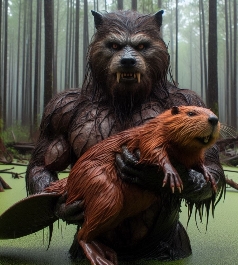
Animal populations will meet the carrying capacity of the land.Overpopulations unchecked will lead to habitat destruction and or widespread disease that can decimate wildlife populations and it can take a long time for them to come back depending on how severely they have been pared back and how widespread the habitat has been negatively effected.
When supporting habitat is intact prolific animals like beaver and rats can come back very quickly as most of the young will survive and reproduce.
Predators after culls or control programs can also come back quickly to meet the available carrying capacity.
The land can only support so many animals and overpopulations will be cut back naturally leading to boom and bust cycles.
Managed populations can flatten the sine wave.
nature will always seek a balance one way or the other regardless.
Everything is much better off if man takes the excess that is always produced each year beyond the carrying capacity.
Yes, and excessive pressure (such as overharvesting when the fur prices are high) driving the population significantly below the carrying capacity will mean that individuals that produce bigger litters will leave more progeny, all other factors being equal. When the habitat is overcrowded, producing big litters is NOT beneficial and other factors come into play, because the "excess" progeny won't have the opportunity to establish because all habitat is already taken and there's not enough food/space for everyone, and producing bigger litters is more energy-expensive for the parents.
So yes, while trapping/hunting pressure doesn't exactly put the animals into "high gear",
some species will gradually "respond" to considerable trapping pressure (or predation for that matter) by having bigger litters. This is why once the pressure is removed (like it happened in late 20th century, when the oil lobby/greenies "canceled" fur,
some species capable of producing huge litters rebound and even become abnormally numerous. Because for many generations, selection influenced by the human factor favored individuals capable of producing big litters.
It's not bad science per se, it's just how populations work. It absolutely doesn't mean that populations shouldn't be managed, just the opposite.